Best Heatsink Fan Options for Optimal Cooling Solutions?
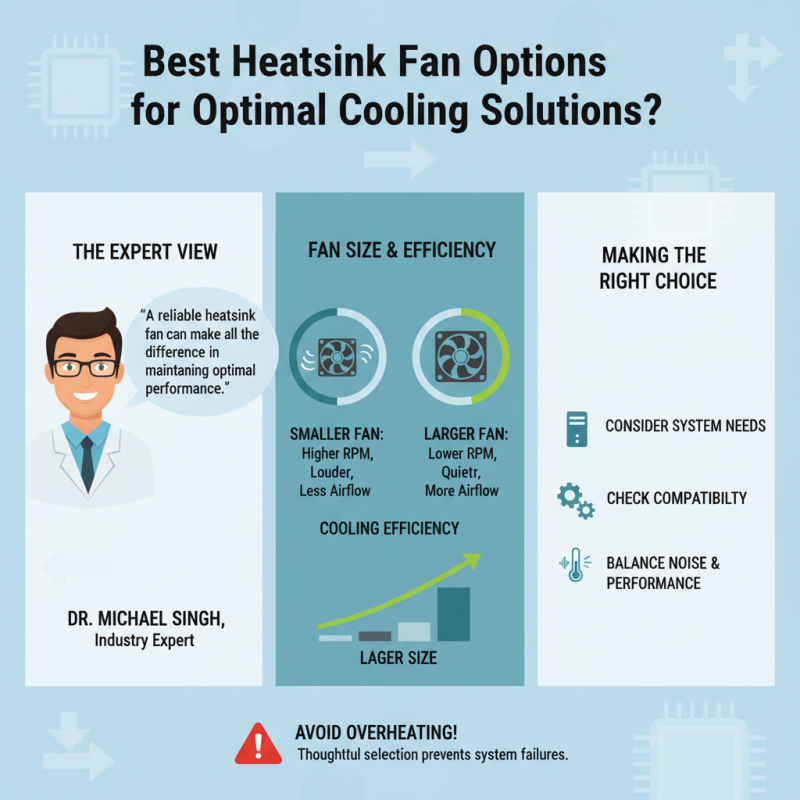
When it comes to computer cooling solutions, the choice of a heatsink fan is critical. Industry expert, Dr. Michael Singh, emphasizes, "A reliable heatsink fan can make all the difference in maintaining optimal performance." The right heatsink fan can significantly enhance your system's efficiency and longevity.
The market offers various heatsink fan options, each designed to tackle specific cooling challenges. Fans come in multiple sizes and designs, affecting airflow and noise levels. Some enthusiasts might overlook the importance of fan size versus cooling efficiency. However, opting for a larger, quieter fan may improve overall system temperature while reducing noise.
Without doubt, selecting the right heatsink fan can feel overwhelming. You may grapple with specifications and compatibility. Mistakes can lead to overheating and system failures. Keeping your components cool isn’t just about choice; it’s about thoughtful selection. Understanding the unique needs of your setup is essential for maximizing performance.
Factors to Consider When Choosing a Heatsink Fan
When selecting a heatsink fan, a few critical factors emerge. First, consider the thermal performance. The effectiveness of a heatsink fan is often quantified by its ability to dissipate heat. According to industry reports, a good heatsink can improve CPU temperatures by 10 to 20 degrees Celsius. This can significantly extend the lifespan of components.
Noise levels also play a crucial role. Fans with higher RPMs can cool better but may produce more noise. Many users prefer fans that operate under 30 dB, as this creates a quieter environment. However, achieving a balance between cooling efficiency and noise reduction is challenging. Realistically, some high-performance models can be intrusive, which may not suit all users.
Compatibility is yet another important aspect. Ensure that the fan fits the specific heatsink and case. Some configurations may restrict airflow, leading to poor cooling. Research has shown that improper installation can reduce cooling efficiency by up to 25%. Therefore, it’s vital to verify specifications before purchasing. These considerations will help guide users toward an optimal cooling solution tailored to their specific needs.
Best Heatsink Fan Options for Optimal Cooling Solutions
This chart illustrates some key performance metrics to consider when choosing a heatsink fan, including airflow (measured in CFM), noise level (in dB), price, weight, and RPM. Evaluating these factors can help in selecting the optimal cooling solution for your needs.
Types of Heatsink Fans Available on the Market
When selecting heatsink fans, understanding the types available is crucial for optimal cooling. There are various options, each designed for different applications. One popular type is the axial fan. These fans draw air directly through the heatsink, making them efficient for most use cases. They can produce a good airflow while maintaining a reasonable noise level.
Another option is the centrifugal fan. This type pushes air out at a higher pressure. It is ideal for systems that require focused airflow. Centrifugal fans can be more efficient in tight spaces. They often create more noise, which can be a drawback in quiet environments.
Then, there are specialized models like PWM fans. These allow for speed modulation based on temperature. They help in maintaining performance while reducing noise. Selecting the right type depends on your specific needs, such as space constraints or noise preferences. It's important to weigh these factors carefully. Making a decision without comparing options might lead to less-than-optimal cooling.
Best Heatsink Fan Options for Optimal Cooling Solutions
| Type |
Airflow (CFM) |
Noise Level (dBA) |
Dimensions (mm) |
Price (USD) |
| Air Cooler |
60 |
25 |
120 x 120 x 25 |
45 |
| CPU Cooler |
70 |
30 |
150 x 150 x 25 |
60 |
| Chassis Fan |
50 |
20 |
120 x 120 x 25 |
25 |
| Liquid Cooler |
80 |
35 |
240 x 120 x 27 |
120 |
| Server Fan |
100 |
40 |
140 x 140 x 38 |
80 |
Top Brands Known for Quality Heatsink Fans
When it comes to optimal cooling solutions, the choice of heatsink fans can make a significant difference. Several brands dominate the market, known for their commitment to quality and performance. According to a recent industry report, approximately 65% of users prioritize noise levels and airflow efficiency when selecting a heatsink fan. This data highlights the importance of finding a balance between performance and comfort.
Leading brands often incorporate advanced technologies into their designs. Many utilize fluid dynamic bearings, enhancing the durability and reducing noise levels significantly. Studies indicate that fans with these bearings can last up to 50% longer than traditional models. Additionally, thermal performance is crucial; fans with optimized blade designs can improve airflow by up to 30%, offering considerable thermal advantages.
However, not all products meet expectations. Some users report inconsistencies in cooling performance under heavy loads. This can be an area for improvement, as the demand for quieter and more efficient systems continues to grow. Industry analysts suggest that future developments may need to focus more on enhancing reliability without compromising airflow standards. Selecting a reliable heatsink fan remains a blend of research, trial, and sometimes, disappointment.
Maintenance Practices to Extend Heatsink Fan Lifespan
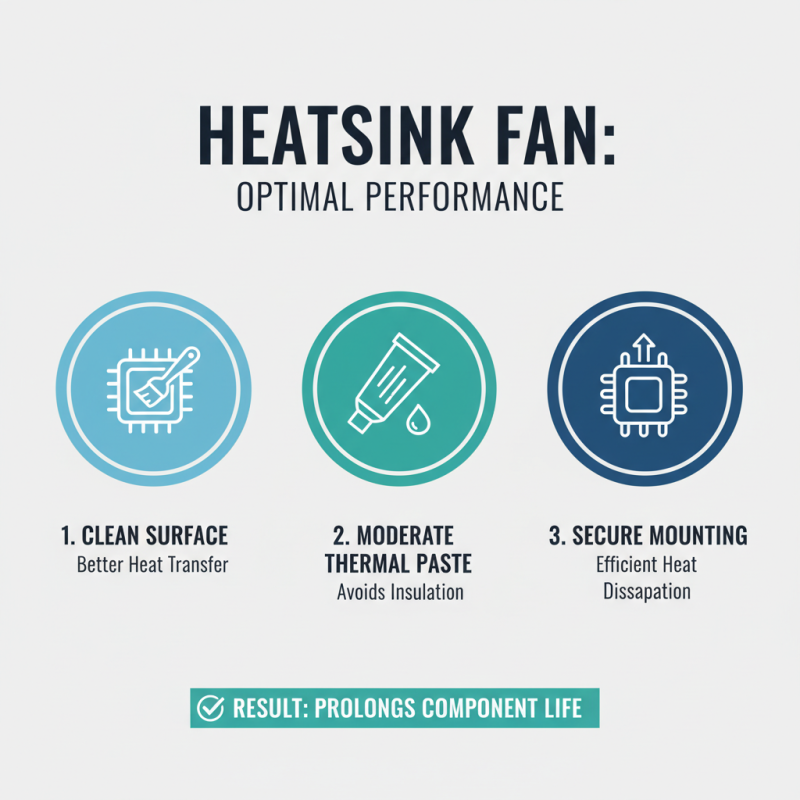
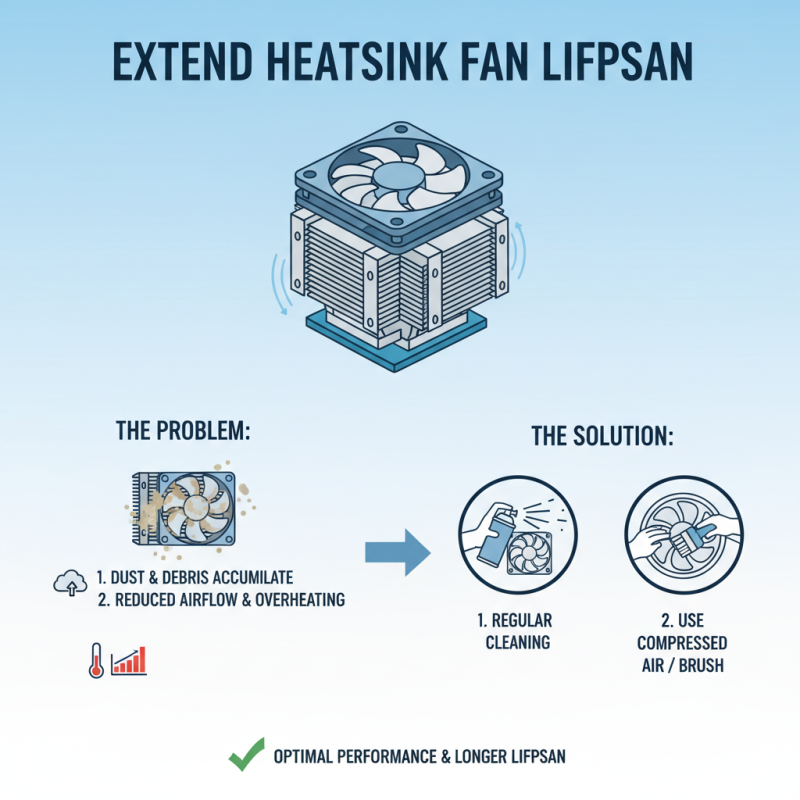
Maintaining your heatsink fan is crucial for optimal performance. A clean fan promotes effective airflow and prevents overheating. Dust and debris accumulate over time, hindering the fan's efficiency. Regular cleaning can significantly enhance the lifespan of your heatsink fan. Use compressed air or a soft brush to clear away dirt.
Lubrication is another key practice. Most fans have bearings that require minimal lubrication. A few drops of oil can reduce friction and noise. Remember, over-lubricating can create a mess. So, use just enough for smooth operation.
Monitor the fan speed and temperature frequently. Anomalies may indicate issues that need attention. Listening for unusual noises is also essential, as they may signal a problem. By being proactive, you can extend the life of your heatsink fan and ensure reliable cooling performance.




 Mr. Perry Wu International Sales Director