How to Choose the Right Aluminum Heat Sink for Your Cooling Needs?
Selecting the right Aluminum Heat Sink for your cooling needs is crucial in various industries. According to a recent market report by Research and Markets, the global aluminum heat sink market is expected to grow significantly, driven by advancements in electronics. This growth highlights the importance of making informed choices when it comes to cooling solutions.
Industry expert Dr. Mark Thompson states, "Choosing the right Aluminum Heat Sink can dramatically improve thermal management." His insight emphasizes the impact of proper selection. However, many engineers still struggle with details like material thickness, surface area, and mounting options. These factors can dramatically affect performance and efficiency.
While it may seem straightforward, not all Aluminum Heat Sinks are created equal. Some designs may not suit specific applications, leading to overheating issues. It's essential to evaluate your unique cooling requirements carefully and consider empirical data. In this evolving field, understanding the nuances can make a significant difference in achieving optimal performance.

Understanding the Basics of Aluminum Heat Sinks and Their Functions
Aluminum heat sinks are vital in many electronic applications. They dissipate heat generated by components, preventing overheating. The efficiency of a heat sink depends on its design, surface area, and material properties. According to a report by the American Society of Heating, Refrigerating, and Air-Conditioning Engineers (ASHRAE), proper thermal management can improve component lifespan by up to 50%.
When selecting a heat sink, consider the thermal conductivity of aluminum. It typically ranges from 205 to 235 W/m·K. This property significantly influences the heat dissipation rate. Additionally, fin design is crucial. Fins increase surface area, allowing more air flow, which enhances cooling. A study by the International Journal of Thermal Sciences highlights the importance of optimizing fin spacing, as too close may restrict airflow.
However, not all heat sinks are created equal. Some designs may not perform well in specific applications. For instance, a compact heat sink may not be suitable for high-power devices. This mismatch can lead to thermal throttling. Identifying the right balance between size and efficiency is essential. Constantly evaluating performance metrics will lead to better choices for your cooling needs.
How to Choose the Right Aluminum Heat Sink for Your Cooling Needs?
| Heat Sink Type |
Material |
Dimensions (mm) |
Cooling Capacity (W) |
Weight (g) |
Application |
| Extruded Heat Sink |
Aluminum |
50 x 50 x 30 |
40 |
100 |
LED Lighting |
| Pin Fin Heat Sink |
Aluminum |
60 x 60 x 50 |
60 |
150 |
CPU Cooling |
| Flat Plate Heat Sink |
Aluminum |
80 x 80 x 2 |
20 |
50 |
Power Electronics |
| Heat Pipe Heat Sink |
Aluminum |
100 x 100 x 20 |
80 |
200 |
Graphic Cards |
| Louvered Heat Sink |
Aluminum |
70 x 70 x 40 |
50 |
120 |
Telecommunication |
Evaluating Your Cooling Requirements: Size, Efficiency, and Application
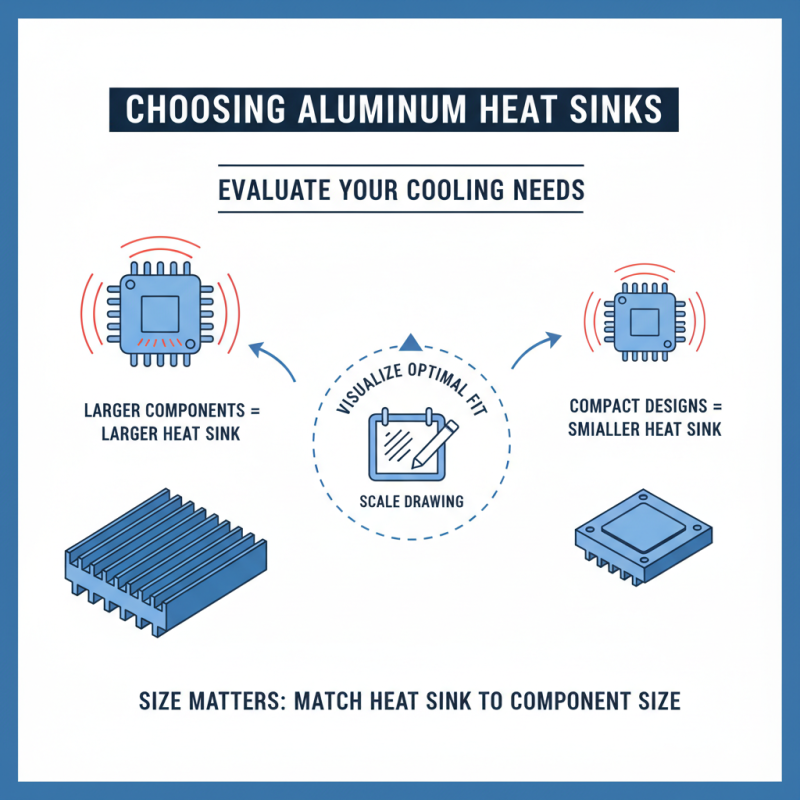
When choosing the right aluminum heat sink, understanding your cooling needs is paramount. Begin by evaluating the size of your electronic components. Larger devices generate more heat, requiring a bigger heat sink. On the other hand, compact designs may only need smaller solutions. Make a scale drawing of your setup to visualize what will fit.
Efficiency is another key factor. The thermal conductivity of aluminum plays a crucial role. You want a heat sink that can transfer heat away quickly. Consider natural convection versus forced air cooling. For devices that run continuously, a fan might improve performance significantly.
Tips: Test different designs. Sometimes, a non-traditional shape works better. Also, keep an eye on the ambient temperature. It can affect how well your heat sink performs.
Application matters too. If your device operates in high-temperature environments, you may need specialized coatings. Reflect on past projects to guide your decisions. Each experience helps refine your approach. Evaluate what worked and what didn’t to make better choices in the future.
Key Factors in Selecting Aluminum Heat Sinks: Material and Design
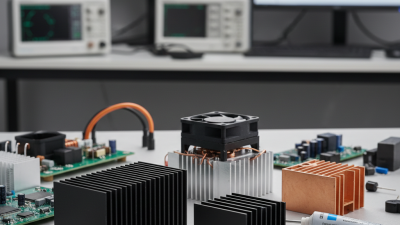
Selecting the right aluminum heat sink plays a crucial role in effective thermal management. The material's thermal conductivity, typically around 205 W/m·K, means aluminum excels at dissipating heat. Its lightweight nature also contributes to device efficiency. However, attention must be given to the design of the heat sink. Fins, for example, increase surface area, improving airflow and heat transfer. Yet, not all designs are suited for every application.
Considerations like size and weight are vital. A bulky heat sink may impede a device's portability. Conversely, a smaller heat sink might not provide sufficient cooling. A recent industry report highlighted that a proper design can enhance thermal performance by up to 30% compared to inadequate solutions. This increase is particularly significant in applications where overheating can cause system failures.
Furthermore, be aware of the environment where the heat sink will be used. Harsh conditions can affect material choice, while varying airflow patterns may dictate the design. It's essential to balance performance and practicality. A mismatch can lead to wasted resources and compromised device functionality. As you weigh your options, always reflect on long-term needs and potential adjustments.
Analyzing Performance Metrics: Thermal Conductivity and Heat Dissipation
When selecting an aluminum heat sink, understanding thermal conductivity and heat dissipation is crucial. Thermal conductivity measures how quickly heat travels through a material. Aluminum is popular due to its excellent conductivity. This means it can transfer heat efficiently, keeping components cool.
However, the thickness and surface area of a heat sink impact its performance as well. A thicker heat sink may hold more heat but can be heavier. An increased surface area allows for better heat dissipation. This is where design becomes important. A finned design increases the surface area without adding much weight. Careful consideration of these metrics ensures effective cooling for your specific needs.
Yet, not all designs will work perfectly for every application. Some setups might require unconventional shapes or even additional features. Analyzing the specific cooling demands is vital. It’s worth re-evaluating your choice periodically. What worked last season might not suffice now. Don't overlook real-world testing to find the most efficient solution.
Installation and Maintenance Considerations for Optimal Cooling Performance
When installing an aluminum heat sink, proper placement is crucial. Ensure it contacts the heat source directly. A tight fit can improve thermal conductivity significantly. Studies show that a 10% increase in surface contact can enhance heat dissipation. Consider ambient temperature. Excessive heat can lead to performance drops.
Regular maintenance is important. Dust accumulation can insulate the heat sink. Clean it regularly to maintain efficiency. In fact, research indicates that clean heat sinks can operate 15% more effectively. Monitor the thermal interface material, too. With time, its effectiveness diminishes. A replacement every year is a good practice.
Installing heat sinks near airflow ensures better cooling. If airflow is limited, performance may suffer. A balance between size and efficiency is necessary, yet often overlooked. Larger heat sinks can feel cumbersome but may perform better in tight spaces. Re-evaluate your choices periodically for optimal performance.




 Mr. Perry Wu International Sales Director