Flat Heat Pipe Solutions at China Import and Export Fair 2026?
The China Import and Export Fair, also known as the Canton Fair, is a significant platform for showcasing innovations and technologies. In 2026, the event will feature a focus on advanced manufacturing and will highlight "Flat Heat Pipe" solutions. These products play a crucial role in thermal management across various industries.
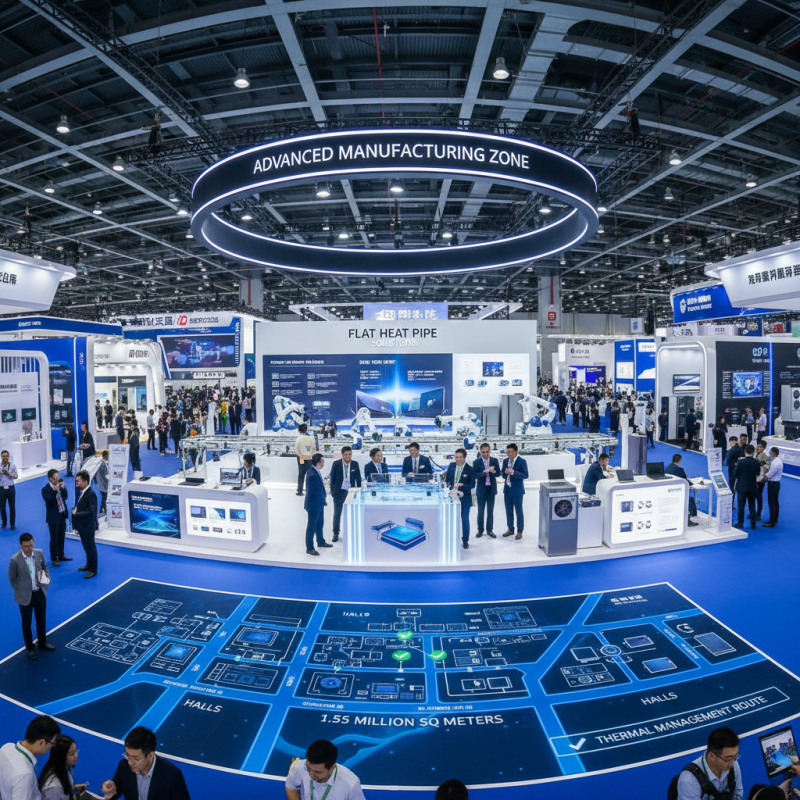
Flat heat pipes offer effective and efficient heat transfer solutions, which are essential for electronics and appliances. With the integration of AI technology at the fair, attendees can quickly identify suppliers that meet specific qualifications like ISO and CE certifications. The large exhibition area covers 1.55 million square meters, making the organization vital for optimal navigating.
Yet, challenges in adoption remain. Many companies may overlook flat heat pipes for conventional methods. Awareness about their benefits must increase. Exhibitors should demonstrate their products in practical scenarios to reflect real-world applications. By doing so, they can spark interest and highlight the significance of adopting innovative solutions like flat heat pipes in modern manufacturing.
Flat Heat Pipe Technology Overview: Fundamentals and Applications
Flat heat pipe technology is increasingly gaining attention for its efficiency and versatility in thermal management. This technology utilizes the principles of phase change to transfer heat effectively. A recent industry report estimates that the global heat pipe market will reach approximately $1.4 billion by 2027. As devices become more compact and powerful, the demand for efficient cooling solutions rises.
Applications of flat heat pipes span various sectors, including electronics, aerospace, and renewable energy. In electronics, they dissipate heat from components, ensuring optimal performance and longevity. In aerospace, they manage heat in critical systems. Data shows that a well-designed heat pipe can improve thermal performance by over 30% compared to traditional methods. However, not all flat heat pipes are created equal. Design flaws can lead to inefficient heat transfer, prompting ongoing research for improvement.
The technology's complexity often leads to manufacturing challenges. Ensuring consistent performance across different environments remains a hurdle. For instance, heat pipes may behave differently at varying altitudes and temperatures. This inconsistency can impact reliability, particularly in demanding applications. Thus, while flat heat pipes offer innovative solutions, careful consideration is needed to harness their full potential effectively.
Flat Heat Pipe Technology Overview: Fundamentals and Applications
Key Advantages of Flat Heat Pipes in Thermal Management Solutions
Flat heat pipes are gaining traction in thermal management solutions due to their unique advantages. These devices effectively transfer heat using a liquid and vapor phase change mechanism. According to industry reports, the global thermal management market is projected to reach $18 billion by 2026. This surge often relates to increasing demands for efficient cooling systems in electronics and automotive industries.
One notable feature of flat heat pipes is their lightweight and slim profile, making them ideal for space-constrained applications. They can handle high heat loads while maintaining a low temperature gradient. This efficiency is crucial for modern electronics, where overheating can cause device failures. However, efficiency can vary based on design and operating conditions. Some designs may not perform optimally in every environment, necessitating careful selection and testing.
Moreover, flat heat pipes offer versatility in configuration. They can be oriented in various positions and still maintain effective heat transfer capabilities. This aspect is vital for designers facing unique layout constraints. Despite their advantages, challenges like material compatibility and manufacturing consistency remain. Ongoing research aims to address these issues, ensuring that flat heat pipes continue to evolve in meeting diverse thermal management needs.
Market Trends and Demand for Flat Heat Pipes in 2026
The demand for flat heat pipes is increasing in 2026. Industries such as electronics and automotive are driving this trend. These components offer efficient thermal management solutions. They can enhance product reliability and performance. As thermal needs grow, so does the focus on flat heat pipe technology.
Market trends indicate a shift towards lightweight materials. This change can reduce energy consumption. However, the speed of innovation must keep pace with market needs. Many manufacturers will face challenges in production efficiency. Meeting the rising demand may require significant investment.
Moreover, sustainable practices in manufacturing are essential. Eco-friendly materials could attract more customers. But the transition can be complex and costly. Many firms still hesitate to implement these changes. The opportunity is clear, yet the path is not without obstacles. Companies must navigate these realities carefully to succeed.
Innovative Designs in Flat Heat Pipe Solutions: Case Studies and Examples
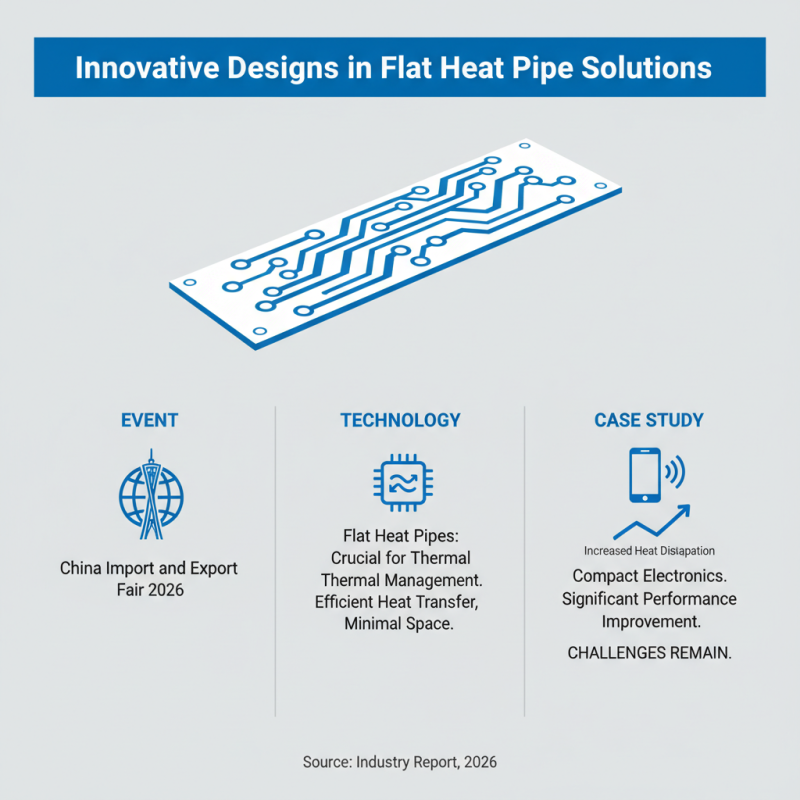
At the upcoming China Import and Export Fair in 2026, innovative designs in flat heat pipe solutions will take center stage. These pipes are crucial for thermal management in various industries. They provide efficient heat transfer with minimal space requirements. One case study highlighted a unique design that significantly increased heat dissipation in compact electronic devices. The results were impressive, but challenges remain.
Another example came from the automotive sector, where a flat heat pipe was integrated into electric vehicle batteries. This solution enhanced cooling efficiency. However, concerns about manufacturing consistency emerged. Issues related to material durability also require attention. Designers must find a balance between performance and reliability in real-world applications.
Exploring flat heat pipe solutions reveals both opportunities and obstacles. While innovative designs push boundaries, manufacturers face production challenges. The necessity for rigorous testing cannot be overlooked. Future developments will require collaboration across various disciplines. Only then can we fully realize the potential of flat heat pipe solutions.
Impact of Flat Heat Pipes on Energy Efficiency in Various Industries
Flat heat pipes have gained attention for their role in enhancing energy efficiency across various industries. These compact devices efficiently transfer heat, making them ideal for applications in electronics, automotive, and renewable energy. Their design allows for effective thermal management, which can lead to reduced energy consumption. Many companies are exploring how to integrate these solutions into their manufacturing processes. However, challenges remain in optimizing production and ensuring reliability.
In the electronics sector, for instance, flat heat pipes can help keep devices cool, prolonging their lifespan. Improved cooling solutions can prevent overheating. This often leads to increased productivity and energy savings. Still, some resistance to change exists. Many companies hesitate to adopt new technologies due to perceived risks. Education about benefits is essential.
Moreover, the environmental impact of adopting flat heat pipes is significant. They can potentially lower carbon footprints. The innovation encourages resource conservation. Yet, the industry must address hurdles in scalability and cost-efficiency. The path forward requires collaboration among stakeholders. Sharing knowledge and experiences is critical for maximizing the advantages of flat heat pipes.
Flat Heat Pipe Solutions at China Import and Export Fair 2026 - Impact of Flat Heat Pipes on Energy Efficiency in Various Industries
| Industry |
Energy Efficiency Improvement (%) |
Cost Savings ($/year) |
Implementation Challenges |
| Electronics |
15 |
200,000 |
Integration with existing systems |
| Automotive |
10 |
150,000 |
Material compatibility |
| Aerospace |
20 |
500,000 |
Weight constraints |
| Renewable Energy |
25 |
300,000 |
Initial investment |
| HVAC |
12 |
100,000 |
System redesign |







 Mr. Perry Wu International Sales Director