Skiving Heat Sink Tips for Effective Cooling Solutions?
As electronic devices become more compact, efficient cooling solutions are critical. The "Skiving Heat Sink" technology has emerged as a prominent method of thermal management. According to a report by ResearchAndMarkets, the global heat sink market is expected to grow at a CAGR of 8.4% from 2021 to 2026, indicating a rising demand for effective cooling strategies.
Dr. Susan Lee, a thermal management expert at CoolTech Innovations, emphasizes, “The efficiency of a Skiving Heat Sink can significantly enhance heat dissipation in high-performance applications.” This innovation leverages precise machining techniques to create fins that maximize surface area, allowing for better airflow and heat transfer. However, manufacturers often face challenges in optimizing materials and designs for specific devices.
Improper design choices can lead to inadequate cooling, which may affect device performance. Moreover, the production process can be costly, raising questions about scalability and feasibility. Understanding these hurdles is essential for advancing Skiving Heat Sink technology as it continues to play a crucial role in various industries, from automotive to computing.
Understanding the Basics of Skiving Heat Sinks for Cooling Applications
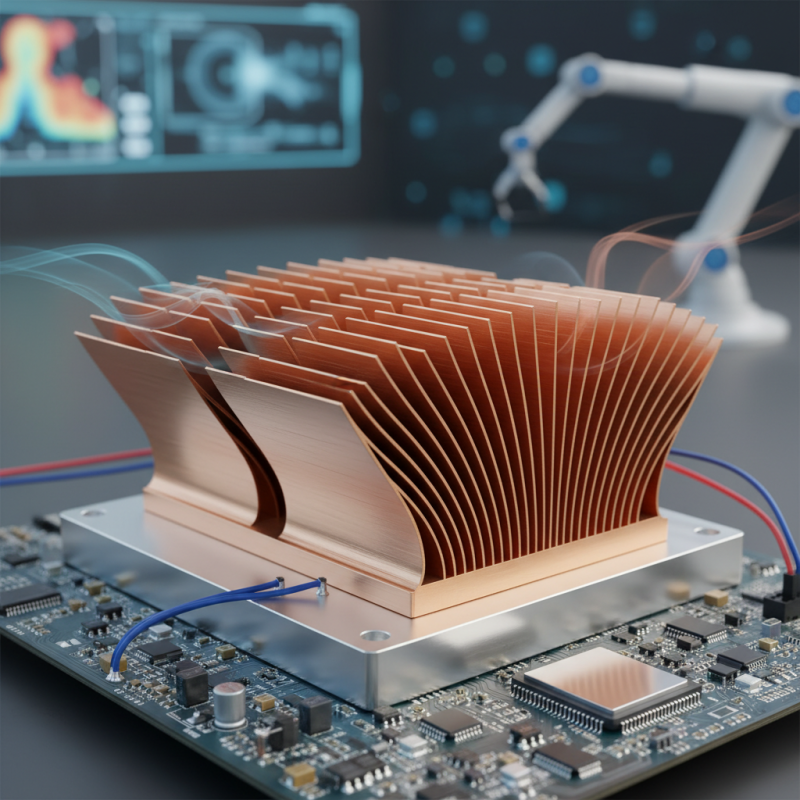
Skiving heat sinks are gaining attention in cooling applications due to their effectiveness. The skiving process involves cutting the material into thin fins. This increases surface area, enhancing heat dissipation. A well-designed skiving heat sink offers better thermal performance than traditional options. However, achieving optimal results requires careful consideration.
One challenge is the choice of material. Aluminum is commonly used, but its thermal conductivity can vary. Not all aluminum grades perform equally in heat transfer. Understanding which material suits specific applications is crucial. Additionally, the skiving technique itself can impact the sink's efficiency. Improper fin thickness or spacing can lead to suboptimal airflow and cooling.
Many engineers overlook these details during the design phase. They assume that all designs will perform equally well. It's essential to evaluate each aspect thoroughly. Testing prototypes can reveal flaws in the design. Recognizing these imperfections leads to better cooling solutions in future iterations. Each step in the skiving process offers opportunities for improvement.
Skiving Heat Sink Tips for Effective Cooling Solutions
| Cooling Application |
Material |
Heat Dissipation (W) |
Dimensions (mm) |
Weight (g) |
| LED Lighting |
Aluminum |
50 |
100 x 50 x 20 |
60 |
| Computer CPU |
Copper |
90 |
90 x 90 x 30 |
150 |
| Power Electronics |
Aluminum |
120 |
120 x 60 x 40 |
200 |
| Automotive Lighting |
Aluminum |
75 |
80 x 40 x 20 |
50 |
| Telecommunications |
Copper |
110 |
100 x 50 x 25 |
80 |
Advantages of Skiving Technique Over Traditional Heat Sink Manufacturing
Skiving is a modern technique that has changed the landscape of heat sink manufacturing. Traditional methods often rely on processes like extrusion and casting. These methods can create bulky designs, which often lack efficiency. Skiving, on the other hand, produces thinner and more compact designs. This leads to better thermal performance in many applications.
One major advantage of skiving is material efficiency. The process removes excess material effectively, reducing waste. This is crucial in an eco-conscious world. Additionally, skived heat sinks feature intricate designs. They often allow for increased surface area, improving heat dissipation. However, the skill required for skiving can be a challenge. Getting the right thickness and structure may need refined expertise.
Manufacturers need to consider their specific needs. Not every application may benefit from skived components. This method might not be the most cost-effective for all situations. Balancing manufacturing costs and thermal efficiency is essential. Engineers must weigh these factors when choosing their cooling solutions.
Skiving Heat Sink Effectiveness Comparison
Key Factors Influencing the Performance of Skived Heat Sinks
Skived heat sinks are a popular choice for cooling applications due to their high thermal efficiency. A 2022 report from the Thermal Management Association suggests that skived designs can achieve thermal conductivity rates up to 200 W/mK. This performance is essential in electronics, where overheating can damage sensitive components. Effective cooling is not only about the design but also about the materials used. Copper and aluminum are common choices, with copper often outperforming aluminum in thermal conductivity.
Another critical factor influencing performance is the design thickness of the fins. The industry standard suggests that fins should ideally be between 0.3 mm and 0.7 mm thick. Thinner fins increase surface area but may compromise structural integrity. A thicker design, while robust, may not maximize airflow. Balancing these aspects can be tricky. Each application might require a different approach.
Real-world tests have shown that even slight variations in fin geometry can yield significant deviations in thermal management efficiency. For instance, a study indicated that a 10% increase in surface area led to a 15% improvement in heat dissipation. Designers sometimes overlook these details, which can impact system performance significantly. Failing to account for airflow dynamics can lead to hotspots. Thus, skived heat sinks present a complex challenge, blending design, materials, and real-world considerations into one efficient solution.
Material Selection for Optimal Heat Conductivity in Skiving Processes
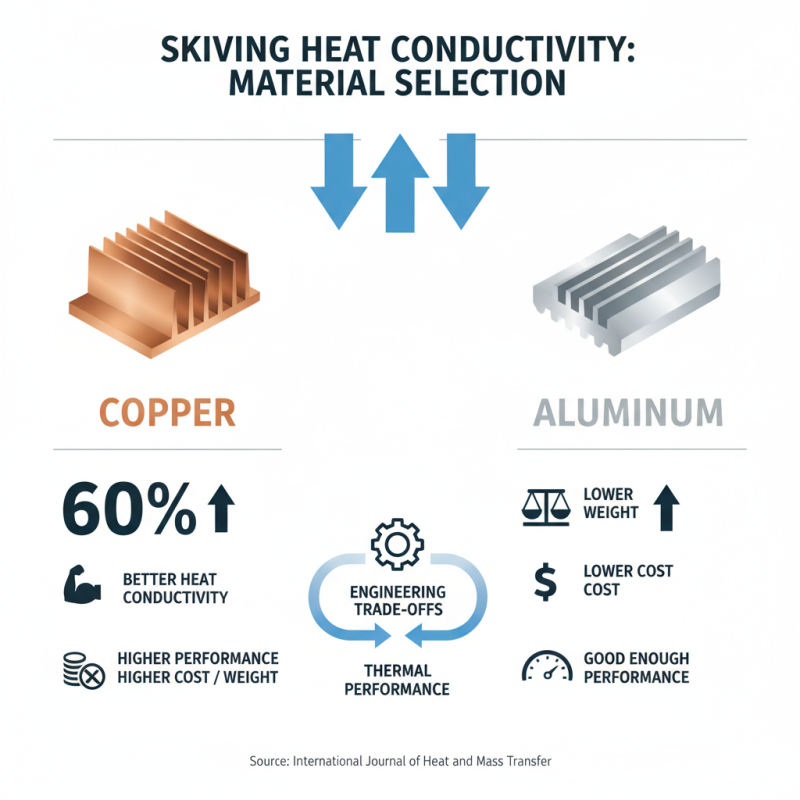
The selection of the right materials is critical for achieving optimal heat conductivity in skiving processes. Copper and aluminum are often the top choices due to their exceptional thermal properties. According to a report published by the International Journal of Heat and Mass Transfer, copper can conduct heat 60% better than aluminum. However, aluminum offers a lower weight and cost advantage. This trade-off is essential for engineers to consider when designing cooling solutions.
Another aspect to consider is the skiving process itself. Proper skiving techniques can enhance the surface area, improving heat transfer efficiency. The Journal of Materials Science highlights that a well-skived surface can increase thermal performance by up to 25%. Yet, it’s important to recognize that not all skiving processes yield the same results. Misalignment or inadequate tooling can lead to subpar thermal efficiency.
Furthermore, there is a growing trend to explore composite materials that combine metals with polymer-based substances. Such materials aim to balance weight, cost, and thermal performance. While promising, they often lack sufficient data in real-world applications. More research is needed to validate their effectiveness over traditional metal options. Engineers must remain cautious and rigorous in evaluating all material choices to ensure high performance in their thermal management systems.
Best Practices for Implementing Skiving Heat Sinks in Various Systems
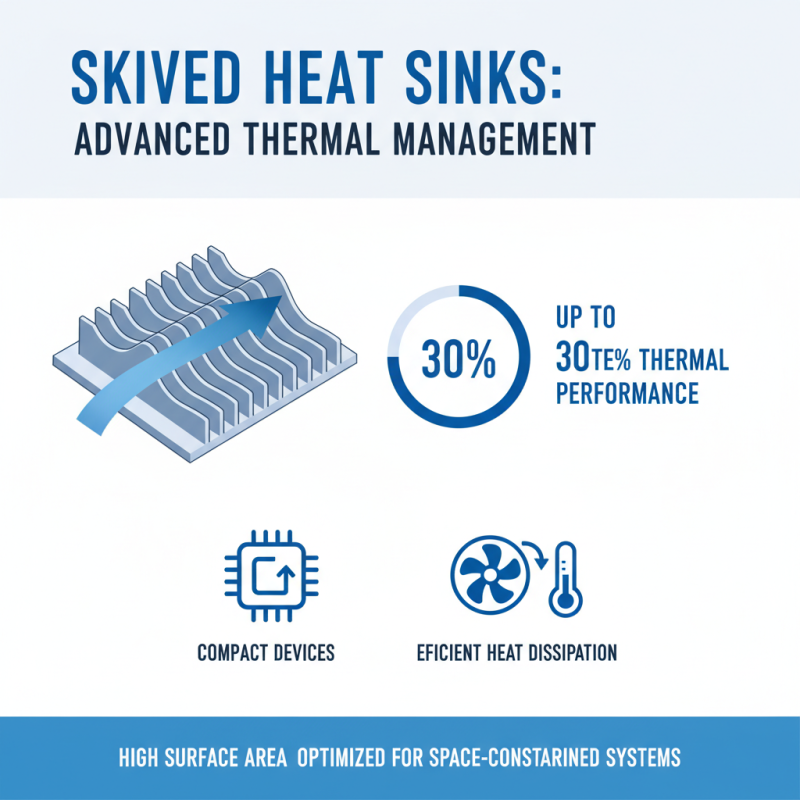
Implementing skiving heat sinks offers unique advantages across various systems. These components excel in thermal management due to their high surface area and efficient heat dissipation. According to recent industry reports, skiving can achieve thermal performance up to 30% better than traditional methods. This makes them appealing for compact devices where space is limited.
Designing a skiving heat sink requires careful consideration of the material and geometry. Copper and aluminum are common choices, each with its own thermal conductivity properties. The skiving process generates thin fins that enhance heat transfer, but they must be precisely spaced. Improper design can lead to airflow restrictions and reduced efficiency. A case study indicated that a poorly designed skiving heat sink failed to meet thermal requirements, leading to increased system failures.
As for installation, ensuring a proper interface between the heat sink and component is crucial. Poor contact can result in significant thermal resistance. Regular maintenance checks are recommended to prevent dust buildup, which can impede performance. Balancing these factors can be challenging, yet attention to detail is essential for successful implementation.






 Mr. Perry Wu International Sales Director