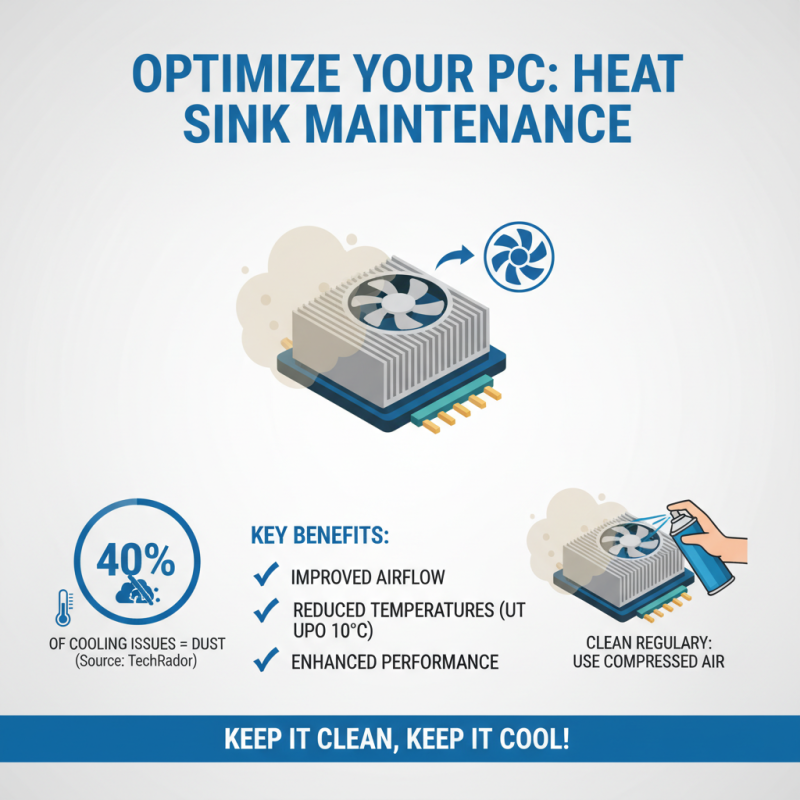
Top 10 CPU Heat Sinks You Need for Optimal Cooling?
In the world of computing, a CPU heat sink is essential for maintaining optimal performance. Choosing the right heat sink can significantly affect your system's efficiency. High-quality options can prevent overheating and extend the lifespan of your components.
With many choices available, it’s vital to understand what makes a great CPU heat sink. Various factors come into play, like material, size, and design. A well-designed heat sink can dissipate heat quickly, keeping your CPU cool during intense tasks. You might find yourself overwhelmed by the options.
But, even the best heat sinks have drawbacks. Some are bulky, making installation tricky. Others may not fit your specific CPU model. The right balance of performance and compatibility is crucial. In this guide, we'll explore the top 10 CPU heat sinks that offer exceptional cooling while considering these important details.
Understanding CPU Heat Sinks and Their Importance in Cooling
CPU heat sinks play a vital role in maintaining optimal temperatures for processors. They absorb heat from the CPU and dissipate it into the surrounding air. This process prevents overheating, which can lead to performance issues or hardware damage. An effective heat sink enhances system stability during heavy workloads. Without it, the CPU's lifespan may decrease significantly.
Choosing the right heat sink can be challenging. Various factors come into play: size, material, and fan speed. Some heat sinks are bulky, which may limit case compatibility. Others might not cool effectively, even if they appear sleek. Users need to find a balance between aesthetics and functionality.
Installation can also be tricky. A poor fit can lead to inadequate cooling. Proper thermal paste application is essential. Too much or too little can diminish performance. Understanding these details can be overwhelming for beginners. However, being informed about CPU heat sinks is crucial. They play an essential role in achieving optimal performance and longevity for your system.
Key Factors to Consider When Choosing a CPU Heat Sink
When selecting a CPU heat sink, several key factors play a crucial role in ensuring optimal cooling performance. The cooling capability is paramount. A heat sink's thermal resistance is a key indicator. Research shows that effective heat sinks should maintain thermal resistance below 0.5 °C/W for high-performance CPUs. This ensures efficient heat dissipation and helps maintain system stability.
Material composition is another important aspect. Copper heat sinks are often favored for their superior thermal conductivity compared to aluminum. However, aluminum can be lighter and more cost-effective. Choosing the right material depends on your system requirements and budget. Be cautious of oversized models, as they may fit poorly in smaller cases, impacting airflow.
Tip: Always check compatibility before purchasing. Mistakes in sizes can lead to frustration and wasted money.
Fan efficiency matters too. A heat sink with a high-CFM fan can cool a CPU better. Look for fans that operate quietly, balancing performance and noise levels. According to studies, a fan operating above 2000 RPM can be quieter while delivering excellent airflow.
Tip: Assess noise levels based on your preferences. A silent environment can enhance your experience.
A well-thought-out choice of heat sink can significantly impact your system's longevity and performance. Keep these factors in mind during your selection process. Choosing poorly may lead to high temperatures and throttling, which can be a costly mistake.
Top 10 CPU Heat Sinks for Performance and Efficiency
When it comes to optimizing CPU performance, efficient cooling is essential. A good CPU heat sink can enhance stability and reliability. Overheating can lead to slowdowns and crashes. Choosing the right sink may feel overwhelming. There are many types to consider, ranging from air coolers to liquid cooling solutions. Each has its pros and cons.
Air coolers are simple and effective. They require minimal maintenance, but can be bulky. Liquid coolers, on the other hand, are sleek and stylish. They tend to be quieter, but might require installation skills. Evaluating your needs is crucial. Consider your case size and airflow. A poor choice can lead to reduced performance.
In addition, noise levels matter. Some heat sinks can be quite loud under load. A balance between cooling and noise is necessary. Continuous operation at high temperatures can shorten the CPU's lifespan. Reflect on how long you plan to use your setup. Investing in a quality heat sink is worth it in the long run. Aim for a solution that meets your specific needs.
Top 10 CPU Heat Sinks for Optimal Cooling
| Rank |
Model |
Material |
Weight |
Cooling Performance (°C) |
Noise Level (dB) |
| 1 |
Premium Air Cooler |
Aluminum |
600g |
65°C |
30 |
| 2 |
High Performance Cooler |
Copper |
700g |
62°C |
28 |
| 3 |
Standard Air Cooler |
Aluminum |
500g |
70°C |
32 |
| 4 |
Compact Cooler |
Copper |
450g |
75°C |
35 |
| 5 |
Ultra Silent Cooler |
Aluminum |
550g |
68°C |
25 |
| 6 |
Performance Behemoth |
Copper |
800g |
61°C |
29 |
| 7 |
Budget Air Cooler |
Aluminum |
400g |
78°C |
37 |
| 8 |
Performance Plus Cooler |
Copper |
750g |
63°C |
27 |
| 9 |
Silent Pro Cooler |
Aluminum |
500g |
72°C |
24 |
| 10 |
Eco-Friendly Cooler |
Recycled Aluminum |
500g |
74°C |
31 |
Comparison of Air vs. Liquid CPU Cooling Solutions
When it comes to CPU cooling, air and liquid solutions are the primary contenders. Air cooling uses heat sinks and fans to dissipate heat. These systems are generally easier to install and maintain. They rely on the ambient air flow to cool the components. However, they may not always provide sufficient thermal management for high-performance CPUs. In some cases, noise can be a concern, especially with high RPM fans.
On the other hand, liquid cooling solutions are designed for more serious thermal performance. They utilize a liquid coolant to transfer heat away from the CPU. This method allows for more efficient heat dissipation. The setup typically includes a radiator and a pump. Although liquid cooling can be quieter, it requires more effort for installation. There's also a risk of leaks, which is a significant drawback.
Ultimately, users must evaluate their needs. Those seeking simplicity might lean toward air solutions. But for extreme overclocking, liquid cooling is worth considering. Each method has distinct advantages and disadvantages. The choice depends largely on personal preferences and specific use cases. Users should reflect on what is most important: noise, performance, or ease of maintenance.
Top 10 CPU Heat Sinks for Optimal Cooling







 Mr. Perry Wu International Sales Director