Top Types of Transistor Heat Sink for Effective Thermal Management?
In the realm of electronics, thermal management is crucial. Without proper heat dissipation, transistors can overheat and fail. A Transistor Heat Sink serves as an essential component to mitigate this risk. By absorbing and dispersing heat, it ensures reliable operation.
Various designs exist to enhance efficiency. Some heat sinks are made from aluminum, while others use copper. Each material has different thermal conductivity properties. Choosing the right one can significantly impact performance. A poorly selected heat sink may lead to inadequate cooling. This can compromise the longevity of the transistor.
When implementing thermal solutions, consideration of size and shape is vital. Space constraints can dictate the type of heat sink used. It's important to balance aesthetic considerations as well. Ultimately, a well-designed Transistor Heat Sink can optimize device performance while preventing failures. However, understanding the specific application needs requires careful evaluation.
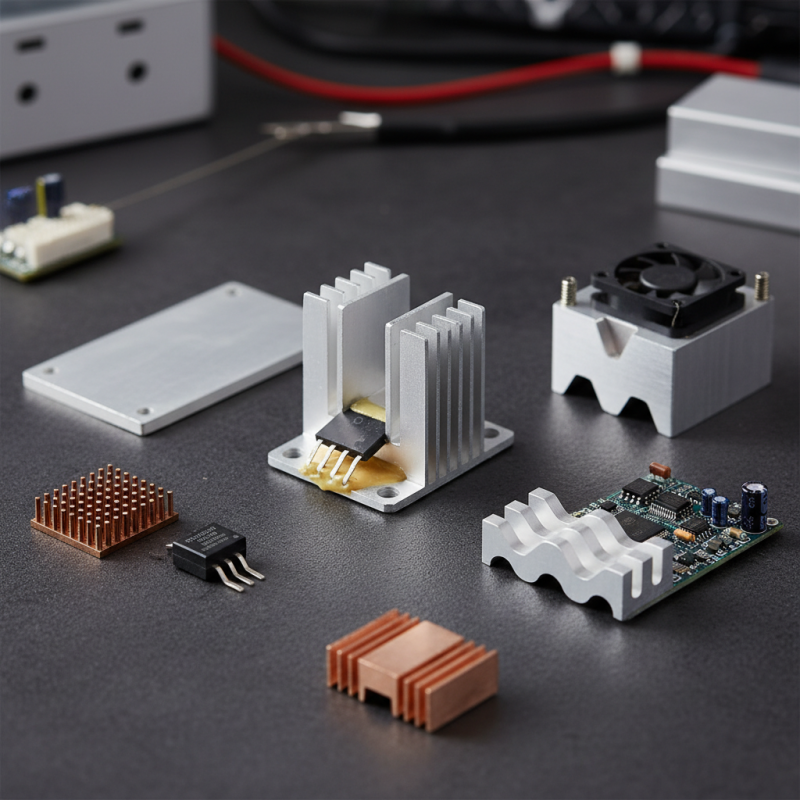
Top Types of Transistor Heat Sink for Effective Thermal Management
Heat sinks play a crucial role in managing the thermal performance of transistors. They help dissipate excess heat generated during operation. Various types of heat sinks exist, each with unique features and effectiveness.
One common type is the finned heat sink. These have extended surfaces that increase contact area with air. The more fins, the better the heat dissipation, but they also take up space. Another type is the flat heat sink. This is simpler and can be easier to install. However, its heat dissipation may be less efficient compared to finned designs.
Tips for selecting a heat sink include considering the transistor's power output and the environment it's in. Ensure adequate airflow surrounds the heat sink. Also, think about the thermal interface material; it can impact thermal performance significantly. Sometimes, a combination of heat sinks or additional cooling methods may be necessary. Reflect on the various factors and find the best fit for your needs.
Common Materials Used in Heat Sink Manufacturing
When it comes to thermal management in electronics, heat sinks play a crucial role. Common materials used in heat sink manufacturing significantly influence their effectiveness. Aluminum is widely favored for its lightweight nature. It conducts heat well, which enhances its ability to dissipate heat efficiently. Research from the Thermal Management Group indicates that aluminum can improve heat dissipation by up to 35% compared to other materials.
Copper is another popular choice, appreciated for its superior thermal conductivity. It has a thermal conductivity of around 400 W/mK, making it ideal for high-performance applications. However, it is heavier and more expensive than aluminum. This trade-off can lead to challenges in design and cost management in some projects. Despite its benefits, the weight of copper may complicate installation in compact devices.
In recent years, composite materials have gained traction. They combine metals with polymers to achieve optimal performance. Some composites can offer better thermal management than traditional metal heat sinks. Still, they often lack the reliability and durability of metals. As the demand for more efficient heat management grows, ongoing research is needed to refine these materials for broader applications.
Top Types of Transistor Heat Sink for Effective Thermal Management
| Heat Sink Type |
Material |
Thermal Conductivity (W/m·K) |
Weight (grams) |
Common Usage |
| Fin Heat Sink |
Aluminum |
205 |
50 |
Power Electronics |
| Heat Pipe Sink |
Copper |
390 |
100 |
CPU Cooling |
| Passive Heat Sink |
Aluminum Alloy |
150 |
30 |
LED Systems |
| Active Heat Sink |
Copper and Aluminum |
250 |
120 |
High-performance Applications |
| Vapor Chamber |
Copper |
400 |
200 |
High-end Processors |
Passive vs. Active Heat Sink Designs: Pros and Cons
When it comes to cooling transistors, heat sinks play a crucial role. Passive heat sinks rely on airflow and thermal conductivity to dissipate heat. These designs often utilize materials with high thermal conductivity, such as aluminum or copper. They are typically quieter and require no external power. However, their effectiveness can be limited by environmental factors. In some applications, passive heat sinks may not provide sufficient cooling, especially in high-performance scenarios.
Active heat sinks incorporate fans or pumps to enhance airflow or fluid circulation. This design accelerates the cooling process and can handle higher thermal loads. While they are generally more effective, they also come with drawbacks. Active systems consume additional power and may introduce noise. Maintenance is another concern, as fans can accumulate dust and require cleaning. Choosing between passive and active designs requires careful consideration of specific needs and potential compromises. What works best often depends on the application and design constraints.
Key Factors Influencing Heat Sink Efficiency Ratings
When selecting a heat sink for transistors, several factors play a crucial role in its efficiency. The material used is paramount. Aluminum and copper are common choices. Aluminum is lighter and often more cost-effective. However, copper offers superior thermal conductivity. This can significantly affect heat dissipation.
The design of the heat sink matters too. Fins increase surface area. More surface area allows for better air flow, improving heat transfer. A poorly designed heat sink may fail to dissipate heat effectively. Placement is critical. If airflow is obstructed, even the best heat sinks won't perform well.
Lastly, thermal interface materials (TIMs) enhance heat transfer between the transistor and heat sink. The choice of TIM can make a noticeable difference. Neglecting this can lead to overheating issues. It's easy to overlook details that impact performance. Heat sinks are just one part of a broader thermal management strategy. Be mindful of every element involved.
Top Types of Transistor Heat Sink for Effective Thermal Management
This chart illustrates the thermal conductivity of different types of heat sinks used for effective thermal management in transistors. Higher thermal conductivity values indicate better performance in dissipating heat, which is crucial for enhancing the reliability and lifespan of electronic components.
Conclusion
The article "Top Types of Transistor Heat Sink for Effective Thermal Management" explores the critical role of heat sinks in managing the thermal performance of transistor applications. It begins by highlighting the importance of effective heat management, which is essential for maintaining the reliability and longevity of transistors. Common materials used in the manufacturing of these heat sinks are discussed, providing insight into their thermal conductivity and performance characteristics.
Additionally, the article contrasts passive and active heat sink designs, analyzing their respective advantages and disadvantages. Key factors that influence the efficiency ratings of heat sinks are examined, as well as industry standards and best practices that guide effective thermal management. Overall, understanding these elements is vital for selecting the appropriate Transistor Heat Sink to optimize thermal performance in electronic devices.






 Mr. Perry Wu International Sales Director