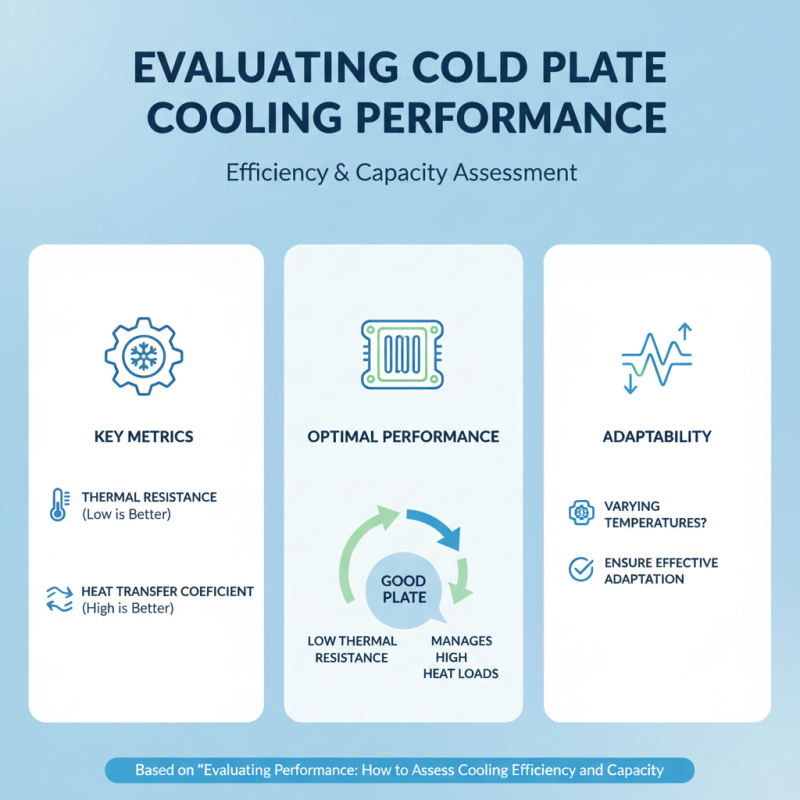
How to Choose the Best Cold Plate Cooling Solutions?
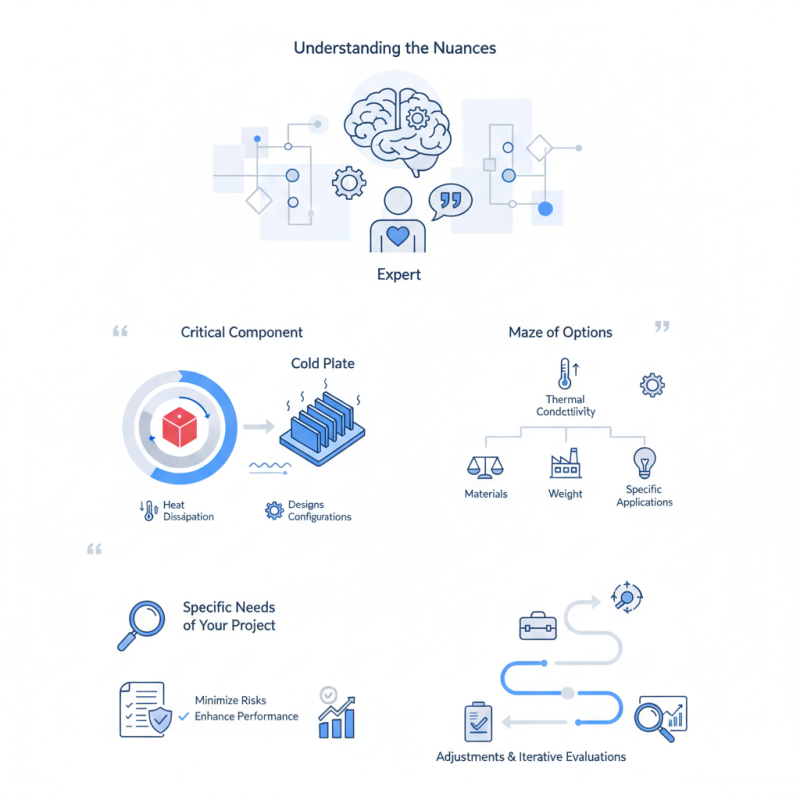
When selecting the best cold plate cooling solutions, understanding the nuances of Cold Plate Cooling is vital. Dr. Emily Chen, a leading expert in thermal management systems, once stated, "The right cooling solution can make all the difference in performance and reliability." This emphasizes the importance of making informed choices.
Cold Plate Cooling involves the efficient transfer of heat away from critical components. Choosing the appropriate materials, designs, and configurations can dramatically impact efficiency. Engineers often face a maze of options. Each design choice should align with specific applications, considering factors like thermal conductivity and weight.
It's crucial to reflect on the specific needs of your project. While numerous products exist, not all will meet your requirements. Considering unique needs minimizes risks and enhances performance. As we navigate various cold plate options, remember that the perfect solution may still require adjustments and iterative evaluations.
Understanding Cold Plate Cooling Solutions and Their Importance
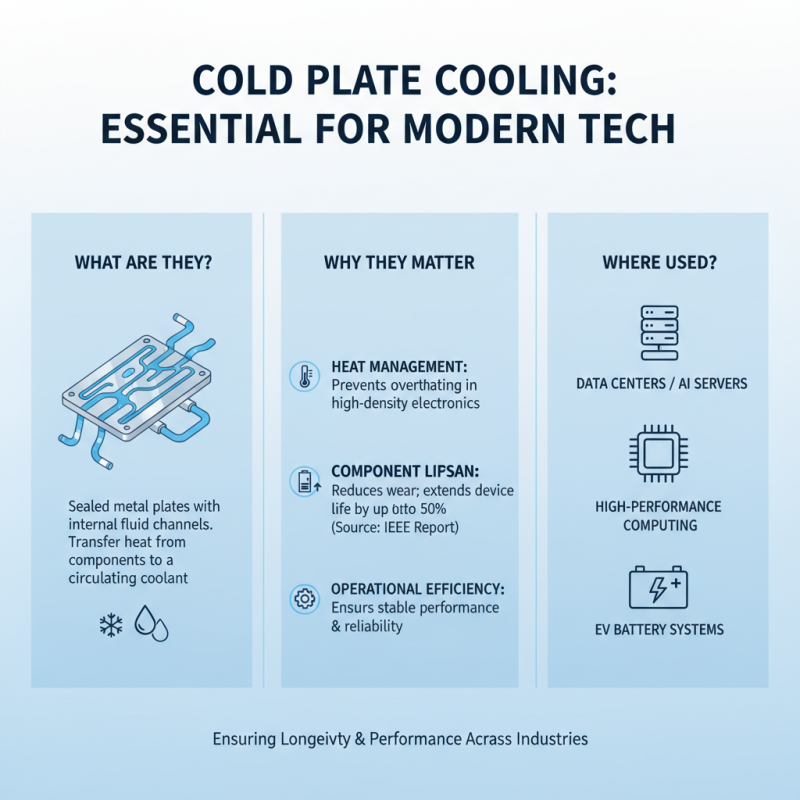
Cold plate cooling solutions play a crucial role in managing heat in various industries. Heat management is essential to ensure the longevity and performance of electronic devices, especially in high-density applications. According to a report by the IEEE, improper cooling can reduce the lifespan of components by up to 50%. Effective thermal management directly affects operational efficiency.
Cold plates work by conducting heat away from components and dissipating it into a coolant, often water or oil. The choice of materials, such as aluminum or copper, significantly influences thermal conductivity. Research indicates that copper offers a thermal conductivity of around 400 W/mK, while aluminum ranges from 200 to 250 W/mK. This makes copper a superior choice, albeit at a higher cost, leading to financial considerations in design.
Not every cold plate solution suits every application. Factors such as size, weight, and mounting configurations matter greatly. A report from the Thermal Management Industry Association suggests that a poorly chosen cooling solution can lead to increased thermal resistance by 20-30%. Consideration of fluid flow rates and the design of fins or channels is key in optimizing performance. Incomplete designs may overlook factors such as maintenance, leading to potential efficiency losses.
Key Factors to Consider When Selecting a Cold Plate Cooling Solution
Selecting the right cold plate cooling solution requires careful consideration of several key factors. First, assess the cooling load your application demands. Understanding the heat dissipation requirements is critical. This will help determine the cooling capacity needed in your cold plate design.
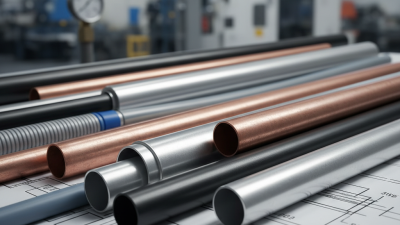
Material selection is another vital aspect. Common materials include aluminum and copper. Each has its own thermal conductivity and weight characteristics. Aluminum is lightweight but may not dissipate heat as effectively as copper. Choose wisely based on your specific thermal and mechanical constraints.
Tips: Consider the operational environment. If the cooling solution will face varying temperatures or exposure to corrosive elements, choose materials that can withstand such conditions. This can extend the lifespan of your cooling system.
Additionally, evaluate the integration process. Ensure that the cold plate can be seamlessly integrated into your existing systems. Look for solutions that offer flexibility in size and shape. Sometimes, it might require a custom design.
Ultimately, remember that every application is unique. What works for one may not work for another. Test different configurations to determine the optimal balance of performance and cost efficiency.
Types of Cold Plate Cooling Solutions: A Comparative Overview
When selecting cold plate cooling solutions, understanding their types is crucial. Various designs cater to different applications, including electronic cooling, medical devices, and industrial machinery. Each type has unique advantages and limitations.
Two common types are direct liquid-cooled and air-cooled plates. Direct liquid cooling systems are efficient in removing heat and can handle high thermal loads. According to recent studies, these systems can achieve thermal conductance of up to 60 W/mK. However, their complexity and installation costs can be high, often requiring more maintenance. In contrast, air-cooled solutions are simpler and often cheaper. They are best for smaller applications, but their thermal performance can be inadequate, especially in high-heat scenarios.
Understanding the specific requirements of your application is essential. A thorough assessment of heat loads, space availability, and budget constraints will guide your choice. Ultimately, the best solution depends on balancing performance with practical considerations. Misjudgments can lead to ineffective cooling and increased downtime, underscoring the importance of careful planning.
How to Choose the Best Cold Plate Cooling Solutions? - Types of Cold Plate Cooling Solutions: A Comparative Overview
| Cooling Solution Type |
Material |
Thermal Conductivity (W/m·K) |
Weight (kg) |
Application |
| Copper Cold Plates |
Copper |
400 |
1.5 |
Power Electronics, Aerospace |
| Aluminum Cold Plates |
Aluminum |
205 |
1.2 |
Consumer Electronics, LED Cooling |
| Stainless Steel Cold Plates |
Stainless Steel |
16 |
2.0 |
Food Processing, Medical Equipment |
| Graphite Cold Plates |
Graphite |
150 |
1.0 |
Fuel Cells, Batteries |
| Thermal Interface Cold Plates |
Various (includes Thermal paste) |
Varies |
1.5 |
High Performance Computers, Servers |
Installation and Maintenance Tips for Optimal Cold Plate Performance
To ensure optimal performance of cold plate cooling solutions, installation and maintenance play vital roles. Proper placement of cold plates is crucial. They should be positioned near heat sources to effectively absorb excess heat. Make sure there is a clear path for coolant flow. Blockages can lead to inefficient cooling.
Regular maintenance should not be overlooked. Inspect the system for leaks or clogs periodically. Clean the surfaces of the cold plates to enhance heat transfer. Dust and debris can significantly affect their efficiency. Monitor coolant levels; low coolant can lessen performance, making the system less reliable.
Another important aspect is temperature monitoring. Keeping track of temperature fluctuations can help identify potential issues early. Reacting promptly can prevent more significant problems later. One often-overlooked factor is the environmental conditions surrounding the installation. Too much humidity or dust can negatively impact the cold plate's functionality over time.
Cold Plate Performance Factors
This chart illustrates the various factors influencing the performance of cold plate cooling solutions. Factors like material conductivity have the most significant impact, while insulation quality has the least effect.






 Mr. Perry Wu International Sales Director